
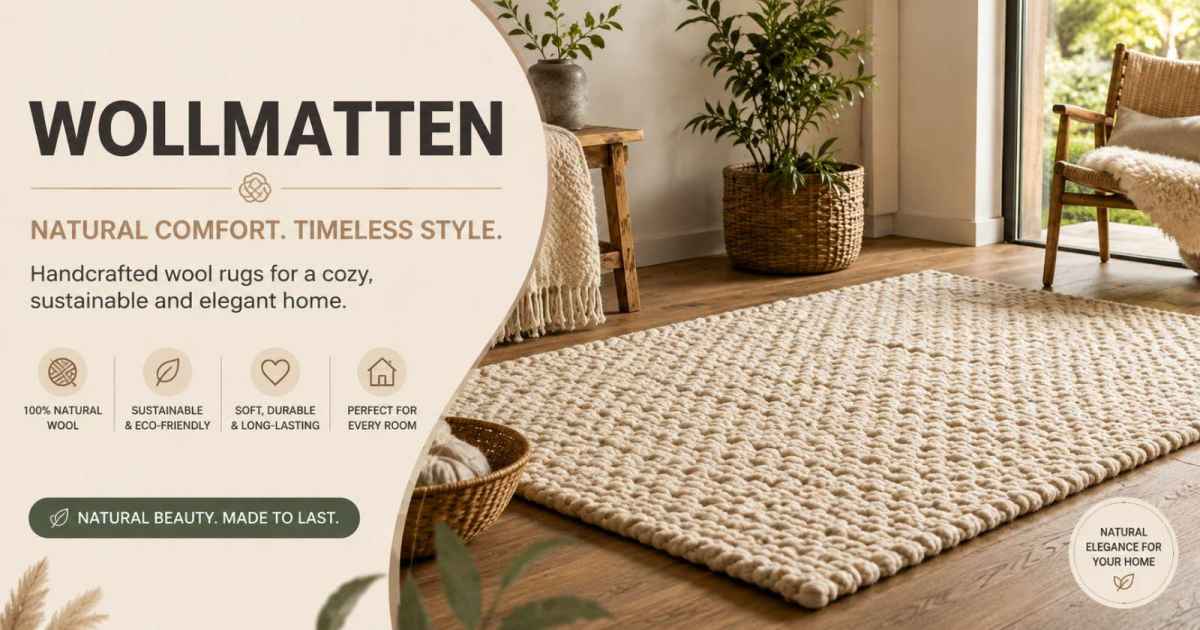
Wollmatten is a German term that generally refers to wool mats, but the word can describe much more than one specific type of product. Depending on the context, a Wollmatte may be a decorative floor covering, a dense felt mat, a meditation or yoga surface, a garden mat, or a specialized wool-based material used for insulation and sound control. The German word is essentially descriptive: “Wolle” means wool, while “Matten” is the plural form of “Matte,” meaning mats. Because the term does not specify a particular size, construction, thickness, or purpose, it is important to understand the intended application before buying or using one.
Interest in Wollmatten in 2026 is closely connected with growing interest in natural materials, comfortable interiors, sustainable products, and traditional textile craftsmanship. Wool is valued for its ability to provide warmth and cushioning while also managing moisture, and it can be processed into products ranging from soft decorative mats to dense technical materials. This complete Wollmatten guide explains the meaning of the word, the different types available, how wool mats are made, their major benefits and limitations, common applications, care requirements, sustainability considerations, and what to check before purchasing one.
What Does Wollmatten Mean?
The simplest Wollmatten meaning is “wool mats.” The singular form is generally Wollmatte, while Wollmatten refers to multiple wool mats. The term itself does not identify a particular company or patented product, which is why searching for Wollmatten can produce very different results. One seller may use the word for an interior floor mat, another for felted wool, and another for a product designed for gardening, wellness, or insulation. In other words, the material and intended purpose matter more than the name alone.
Most Wollmatten are associated with sheep’s wool, although the exact composition can vary considerably. A product marketed as a wool mat may contain pure wool, a wool blend, synthetic fibers, a separate backing, dyes, adhesives, or protective finishes. This is why consumers looking specifically for a natural or pure-wool product should always read the complete material specification rather than assuming that the word “wool” means the entire product is made from wool. Different manufacturing techniques, including felting, weaving, tufting, and needle-punching, can also produce dramatically different textures and performance characteristics.
Types of Wollmatten and Their Common Uses
There is no single universal type of Wollmatten, and understanding the main categories makes it much easier to choose the right product. Decorative wool floor mats and rugs are among the most familiar varieties and are used in bedrooms, living rooms, offices, hallways, and other interior spaces where warmth, texture, and visual appeal are important. These can be woven, tufted, knotted, or felted, with designs ranging from simple contemporary surfaces to traditional handcrafted patterns. Wool’s natural resilience makes it particularly suitable for products intended to remain attractive while experiencing regular everyday use.
Another category is felted or compressed wool mats, which are denser and often firmer than decorative rugs. These can be useful as protective pads, furniture mats, craft materials, acoustic surfaces, or other practical applications where a stable sheet of wool is more useful than a soft pile. Yoga and meditation mats are another specialized use, particularly for practices such as restorative yoga or meditation where warmth and cushioning against a hard floor are desirable. Some modern products are also marketed as garden or landscape wool mats, where wool can be used as a natural ground covering or mulch material. Technical wool mats can additionally be used for thermal or acoustic insulation, although products intended for construction should always be selected according to verified performance specifications rather than simply because they are made from wool.
Benefits of Wollmatten: Why Choose Wool?
One of the main reasons people choose Wollmatten is the distinctive combination of comfort, insulation, resilience, and moisture management offered by wool. Wool fibers have a naturally complex, crimped structure that can trap air, helping create a warmer and softer surface than many hard flooring materials. This makes a wool mat particularly appealing in bedrooms, reading areas, living rooms, and other spaces where people frequently walk or sit barefoot. The actual performance depends heavily on thickness, density, construction, and backing, so two products labeled Wollmatten can feel very different.
Wool is also naturally capable of absorbing and releasing moisture vapor, which contributes to its reputation as a comfortable natural fiber in changing indoor conditions. It can also provide some acoustic benefits because fibrous materials can absorb and diffuse sound. Durability is another important advantage: high-quality wool products can maintain their appearance and resilience for a long time when properly selected and maintained. Some consumers are additionally attracted to wool because it is a renewable natural fiber rather than a petroleum-based synthetic material. However, sustainability should be evaluated at the product level because farming, processing, dyes, backing materials, transportation, manufacturing, and eventual disposal all contribute to a product’s overall environmental footprint.
How Wollmatten Are Made and What to Check Before Buying
The construction of a Wollmatte strongly affects how it performs. In felted wool mats, fibers are mechanically entangled and compressed, creating a dense material without necessarily requiring conventional weaving. Needle-punched wool uses mechanical needles to interlock fibers into a stable sheet, while woven and tufted mats use textile construction methods to create different surface textures and levels of durability. Handmade products may show natural variations in texture and appearance, while mass-produced mats can offer more consistent dimensions and finishes.
Before buying Wollmatten, begin with the question: What job does the mat need to perform? For a bedroom or living room, softness, appearance, shedding, backing, and cleaning requirements may be the priorities. For yoga or meditation, thickness, cushioning, weight, and grip become more important.Buyers should also check fiber composition, dimensions, thickness, backing, care instructions, certifications where relevant, and manufacturer information before making a decision.
How to Clean and Care for Wollmatten
Proper Wollmatten care can significantly extend the useful life of a wool mat. Regular gentle vacuuming is generally an effective way to remove loose dust and dirt from interior wool mats, but excessive suction or aggressive brushing may damage delicate surfaces. Small spills should normally be dealt with promptly by blotting rather than rubbing, because vigorous rubbing can push liquid deeper into the fibers or distort the surface. Always follow the manufacturer’s specific cleaning instructions because construction, dyes, backing materials, and treatments differ between products.
Moisture deserves particular attention. Wool can manage moisture vapor naturally, but that does not mean every wool mat should be soaked or machine washed. Some mats may require professional cleaning, while others may be suitable for carefully controlled spot cleaning. A wool mat should also be allowed to dry thoroughly when it becomes damp, particularly if it sits on a floor that prevents airflow. Do not assume that all Wollmatten can be treated identically; a decorative woven rug, dense felt pad, and garden wool mat have very different maintenance requirements.
Are Wollmatten Sustainable and Worth Buying?
Sustainability is one of the biggest reasons consumers consider Wollmatten, but the answer is more nuanced than simply calling every wool mat “eco-friendly.” Wool is a renewable and biodegradable natural fiber, because sheep can produce new wool, and pure wool can eventually biodegrade under suitable environmental conditions. This can make wool attractive to people who want to reduce their dependence on synthetic materials. However, a finished wool mat may contain synthetic backing, dyes, adhesives, or blended fibers, so its environmental characteristics depend on the entire product rather than the wool fiber alone.
Whether a Wollmatte is worth the price also depends on your priorities. Wool mats can cost more than inexpensive synthetic alternatives, but buyers may value their natural texture, durability, warmth, appearance, and long-term usability. A high-quality wool mat can make sense when you plan to keep it for years and appreciate the characteristics of natural fiber. If your top priorities are the lowest possible purchase price, effortless machine washing, or extremely high moisture resistance, another material may be more suitable. The smartest purchase is therefore not necessarily the cheapest one; it is the product whose material, construction, and performance match the job.
Frequently Asked Questions About Wollmatten
What does Wollmatten mean?
Wollmatten means “wool mats” in German. It is the plural form associated with Wollmatte, or a wool mat. The word is descriptive rather than the name of one specific product, so it can refer to several different types of wool-based mats.
What are Wollmatten made from?
Most Wollmatten are primarily associated with sheep’s wool, but individual products may also contain other natural or synthetic fibers, backing materials, dyes, adhesives, or finishes. Always check the manufacturer’s material specification if pure wool is important to you.
Are Wollmatten warm?
Yes. Wool naturally provides insulation, and its fiber structure can trap air, helping create a warm and comfortable surface. The actual warmth depends on the mat’s thickness, density, construction, and the surface underneath it.
Are Wollmatten good for home interiors?
They can be an excellent choice for bedrooms, living rooms, offices, reading areas, and other interior spaces where warmth, comfort, texture, and natural materials are desirable. The best type depends on the amount of foot traffic and the required level of durability.
Can Wollmatten be used for insulation?
Some wool-based mats are specifically manufactured for thermal or acoustic insulation, but an ordinary decorative wool rug should not automatically be treated as an insulation product. For construction applications, use products with appropriate technical specifications and installation guidance.
Are Wollmatten environmentally friendly?
Pure wool is renewable and biodegradable under suitable conditions, but the environmental impact of a finished mat depends on its complete composition, manufacturing process, transportation, lifespan, and disposal. Products with synthetic backings or blended fibers may have different environmental characteristics.
How do you clean a Wollmatte?
For many indoor wool mats, regular gentle vacuuming and prompt spot treatment are suitable starting points. However, cleaning instructions vary substantially by construction and backing, so always follow the manufacturer’s care instructions before using water, detergents, steam, or a washing machine.
Conclusion
Wollmatten are best understood as a broad category of wool mats rather than one particular product. The German term literally points to wool mats, but modern usage can include decorative rugs, felt pads, meditation surfaces, garden products, and specialized wool-based insulation materials. Their appeal comes from the natural characteristics of wool, including warmth, comfort, resilience, moisture management, and renewable fiber content.
The most important lesson when choosing Wollmatten in 2026 is to look beyond the name. Check the fiber composition, construction, thickness, backing, intended purpose, care instructions, and technical specifications before purchasing. A soft bedroom mat and a construction-grade insulation mat may both be described using wool-related terminology, but they are designed for completely different jobs. When you choose the right type for the right application and maintain it properly, a quality Wollmatte can provide a durable combination of natural comfort, practical performance, and timeless style.