
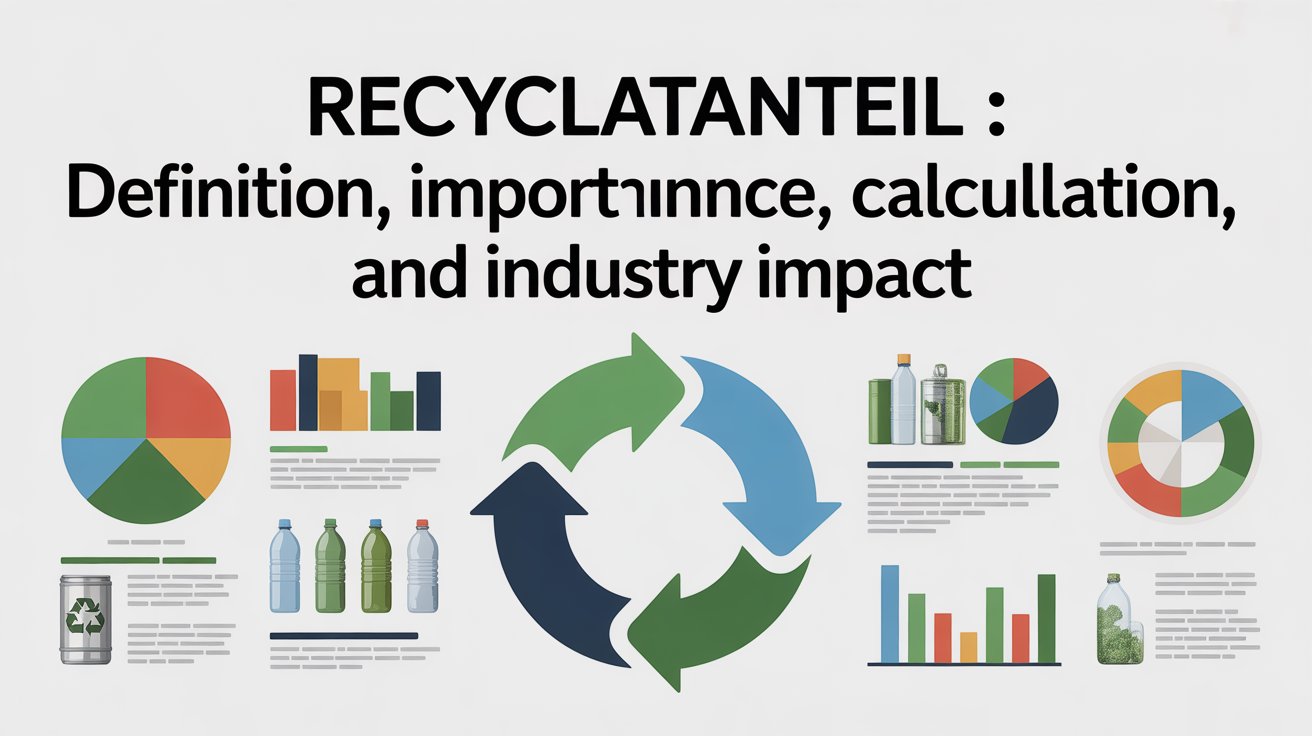
Recyclatanteil is a central concept in modern sustainability strategies, circular economy models, and environmental compliance frameworks. The term refers to the percentage of recycled material used in a product, packaging, or manufacturing process compared to the total material input. As regulatory pressure, consumer awareness, and corporate responsibility standards continue to rise globally, the recyclatanteil has become a decisive metric for evaluating environmental performance and long-term resource efficiency.
We address recyclatanteil not as an abstract sustainability buzzword, but as a measurable, verifiable, and economically relevant indicator that directly affects procurement, production, branding, and regulatory alignment. Organizations across manufacturing, packaging, construction, automotive, and consumer goods sectors rely on a clearly defined recyclatanteil to demonstrate compliance and competitiveness.
What Recyclatanteil Means in Practice
Recyclatanteil describes the ratio of recycled raw materials (recyclates) to the overall material mass of a product or component. This value is typically expressed as a percentage and can be calculated for individual items, material groups, or entire product lines.
A recyclatanteil of 30% means that 30 percent of the total material originates from recycled sources, while the remaining 70 percent comes from virgin raw materials. The recycled content may include post-consumer recyclates, post-industrial recyclates, or a combination of both, depending on regulatory definitions and certification schemes.
Why Recyclatanteil Is a Critical Sustainability Indicator
The importance of recyclatanteil extends far beyond environmental symbolism. It directly influences carbon footprint reduction, resource conservation, waste minimization, and lifecycle assessments. A higher recyclatanteil generally results in lower greenhouse gas emissions, reduced energy consumption, and decreased dependence on finite natural resources.
From a regulatory perspective, many governments and supranational bodies now require minimum recyclatanteil thresholds, particularly for packaging, plastics, and construction materials. Failure to meet these thresholds can result in penalties, restricted market access, or reputational damage.
Recyclatanteil and Circular Economy Models
In a circular economy, materials remain in use for as long as possible, and waste is transformed into new value streams. Recyclatanteil serves as a quantitative bridge between theory and implementation. It demonstrates how effectively secondary raw materials are reintegrated into production cycles.
A consistently high recyclatanteil indicates that a company actively supports closed-loop systems rather than linear “take-make-dispose” models. This directly contributes to supply chain resilience and long-term cost stabilization.
How Recyclatanteil Is Calculated
The calculation of recyclatanteil follows a standardized formula:
Recyclatanteil (%) = (Mass of recycled material ÷ Total material mass) × 100
However, precise calculation requires clear material boundaries, verified input data, and transparent documentation. Many certification bodies demand mass-balance approaches, traceability of recyclate sources, and third-party audits to validate recyclatanteil claims.
Types of Recyclates Used to Determine Recyclatanteil
Post-Consumer Recyclates (PCR)
Post-consumer recyclates originate from products that have completed their lifecycle and entered the waste stream. These materials typically carry a higher environmental value, as they directly reduce landfill and incineration volumes.
Post-Industrial Recyclates (PIR)
Post-industrial recyclates result from production waste, such as offcuts or defective products. While environmentally beneficial, they often carry a lower sustainability weighting than PCR in regulatory frameworks.
Recyclatanteil in Packaging and Plastics
Packaging regulations increasingly mandate specific recyclatanteil levels, especially for plastics. The European Union, for example, has introduced binding targets that require minimum recycled content in plastic packaging. Companies that proactively increase their recyclatanteil gain regulatory security and improved brand credibility.
High recyclatanteil packaging also supports eco-labeling, environmental product declarations, and sustainable procurement requirements imposed by major retailers.
Recyclatanteil in Construction and Building Materials
In the construction sector, recyclatanteil plays a decisive role in green building certifications, lifecycle costing, and public tender eligibility. Materials such as concrete, steel, aluminum, and insulation products are increasingly evaluated based on their recycled content.
A documented recyclatanteil enhances compliance with sustainability frameworks such as LEED, BREEAM, and DGNB, strengthening project approval prospects.
Economic Advantages of a High Recyclatanteil
A strategically optimized recyclatanteil offers measurable economic benefits. Reduced reliance on virgin raw materials lowers exposure to price volatility and geopolitical supply risks. In many cases, recycled materials also require less energy to process, resulting in cost savings across production chains.
Furthermore, a transparent recyclatanteil strengthens customer trust, improves ESG ratings, and increases investor confidence, particularly in sustainability-driven markets.
Challenges in Increasing Recyclatanteil
Despite its benefits, increasing recyclatanteil presents technical and logistical challenges. Material quality variability, contamination risks, and limited recyclate availability can affect product performance and consistency. Overcoming these challenges requires advanced sorting technologies, supplier collaboration, and material innovation.
We address recyclatanteil not as a static figure, but as a dynamic optimization process that evolves alongside technological progress and regulatory development.
Verification, Certification, and Labeling of Recyclatanteil
Reliable recyclatanteil claims require independent verification. Certification systems such as ISCC PLUS, Blue Angel, and EuCertPlast provide structured methodologies for auditing recycled content. Transparent labeling ensures credibility and protects against greenwashing allegations.
Future Trends Shaping Recyclatanteil Standards
The future of recyclatanteil is shaped by digital material passports, blockchain-based traceability, and stricter disclosure requirements. Governments and consumers increasingly demand precise, data-backed recyclatanteil documentation across product lifecycles.
Companies that invest early in recyclatanteil optimization secure long-term compliance, innovation leadership, and market relevance.
Conclusion: Recyclatanteil as a Strategic Performance Metric
Recyclatanteil is no longer optional. It is a strategic performance metric that integrates sustainability, compliance, and economic efficiency into a single, measurable value. Organizations that systematically increase and transparently document their recyclatanteil position themselves at the forefront of responsible production and sustainable growth.
By embedding recyclatanteil into material selection, design processes, and supply chain governance, we create durable value for markets, regulators, and society alike.
Frequently Asked Questions (FAQ)
What is the ideal recyclatanteil for products?
The ideal recyclatanteil depends on industry standards, regulatory requirements, and technical feasibility. Many sectors now target 30–50 percent or higher.
Is recyclatanteil legally required?
In several regions and industries, minimum recyclatanteil thresholds are mandatory, particularly for packaging and plastics.
Does a higher recyclatanteil affect product quality?
With proper material processing and quality control, a high recyclatanteil can meet or exceed performance expectations.
How can recyclatanteil be verified?
Through third-party certification, mass-balance accounting, and documented supply chain traceability.